





Blog / Chevrolet's electric vehicle lineup at Three-Way Chevrolet

EV Charging at Home: Why 2026 Is a Smart Time to Make the Switch

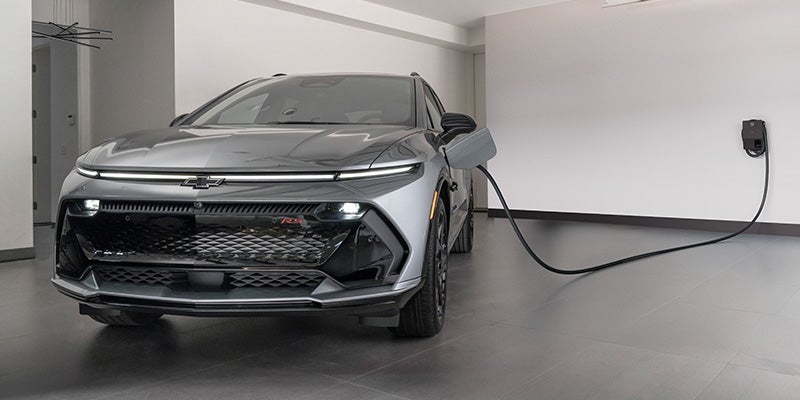
Silver Chevrolet Equinox EV parked with a charging cable plugged in.

One of the biggest misconceptions about electric vehicles is that charging is complicated. In reality, most EV owners do the vast majority of their charging at home. Instead of making special trips to a gas station, they simply plug in at the end of the day and wake up with a charged vehicle the next morning.

That's one of the reasons electric vehicle ownership continues to gain momentum. Home charging is convenient, increasingly affordable, and easier to set up than many first-time EV shoppers expect. For drivers in Bakersfield, CA, 2026 presents more opportunities than ever to explore what home charging can offer.

Why Home Charging Is a Major EV Advantage

The ability to charge where you already park is one of the most compelling aspects of EV ownership. For many drivers, daily commuting requires only a fraction of an EV's available range. That means a vehicle can be replenished overnight and remain ready for the next day's driving without requiring any additional effort. Rather than planning fuel stops during the week, charging simply becomes part of the normal routine. It's a different ownership experience, and for many drivers, it's a more convenient one.

The Economics Continue to Improve

One reason more households are considering EVs is that charging costs can compare favorably with gasoline expenses, particularly when charging during off-peak hours. Many utility providers offer time-of-use plans that encourage overnight charging by offering lower electricity rates during periods of reduced demand. For drivers who charge primarily at home, those programs can help reduce operating costs over time. Combined with various federal, state, and local programs that may help offset equipment and installation expenses, the overall economics of home charging continue to improve. Because incentives and eligibility requirements can change, it's always wise to confirm current programs before making a purchase decision.

Why Level 2 Charging Has Become the Standard

While a standard household outlet can charge an EV, most owners eventually prefer a Level 2 charging setup. Operating on a 240-volt circuit, Level 2 chargers deliver significantly faster charging speeds and are generally capable of replenishing daily driving needs overnight. For households with multiple drivers or higher annual mileage, that additional charging capability can make ownership even more convenient. The goal isn't necessarily charging faster. It's ensuring the vehicle is ready when you need it. That's why Level 2 charging has become the preferred solution for many EV owners.

Utility Programs Can Add More Value

Electric utilities increasingly view EVs as part of the future energy landscape. Many providers now offer programs designed to support home charging adoption. These may include rebates on qualifying charging equipment, incentives tied to smart charging technology, or rate plans designed specifically for EV owners. Some smart chargers can even communicate with utility systems to optimize charging schedules automatically, helping drivers take advantage of lower-cost electricity periods without having to think about it. It's a small example of how connected technology is making EV ownership increasingly seamless.

Chevrolet's EV Lineup Is Built for Home Charging

Chevrolet's growing electric vehicle lineup is designed around the idea that most charging happens at home. Models such as the Equinox EV, Blazer EV, and Silverado EV can all take advantage of Level 2 charging equipment, allowing owners to add meaningful range overnight while parked in their garage or driveway. For many households, that means starting each day with a fully charged vehicle and avoiding routine visits to public charging stations altogether. Public charging remains important for road trips and longer journeys, but home charging is where much of the ownership experience takes place.

A Practical Time to Explore Electric Driving

Home charging infrastructure is expanding, charging equipment is more widely available, and many drivers are discovering that daily charging is simpler than they expected. When combined with potential incentives and lower operating costs, the overall ownership experience continues to become more attractive.

Drivers throughout Bakersfield, CA can explore Chevrolet's electric vehicle lineup at Three-Way Chevrolet and learn more about available home charging solutions. If you're considering an Equinox EV, Blazer EV, or Silverado EV, understanding how home charging works is one of the first steps toward deciding if an EV fits your lifestyle.

Posted in:

Related Posts

Chevrolet Silverado pickup truck parked near mountains and water

What Affects Your Chevrolet Silverado's Fuel Economy?

A Chevrolet Silverado can tow, haul, and spend all day working, but none of that happens without burning fuel. And fuel economy in a full-size pickup isn't determined solely by the engine badge on the truck. Payload, trailers, tire pressure, maintenance and even your right foot can change how quickly the gauge moves toward empty. For Silverado owners around Bakersfield, CA, understanding those variables is especially important because the way a truck is used can have a substantial effect on fuel consumption. Payload Means the Engine Has More Truck to Move The Silverado offers a maximum available payload of 2,260 lbs., and putting hundreds or thousands of pounds into the bed changes the amount of work required to accelerate and move the truck. Carrying unnecessary cargo means repeatedly spending fuel to transport weight you don't need. That doesn't mean leaving tools behind when the job requires them. It means taking a look at what's accumulated in the bed or cab and removing equipment that doesn't need to travel everywhere. Payload capability is there to be used, but carrying near the truck's limit isn't going to produce its best fuel economy. A 13,300 lb. Trailer Doesn't Move for Free Properly configured, the Silverado can tow up to 13,300 lbs. That's substantial capability, but towing introduces additional weight and aerodynamic drag, so fuel consumption increases even with trailers well below the maximum rating. Keeping the load balanced and maintaining steady highway speeds can help avoid adding unnecessary demand. The available In-Vehicle Trailering App can also help drivers monitor aspects of the trailer setup before departure. If you tow frequently, lower fuel economy isn't necessarily evidence that something is wrong with the truck. Pulling a large object through the air simply requires energy. Your Tires Can Make the Engine Work Harder Underinflated tires increase rolling resistance, forcing the powertrain to expend more energy simply keeping the Silverado moving. Check tire pressures regularly, around once a month is a good habit, and use the recommended pressures printed on the driver-side door-jamb label. Don't substitute the pressure molded into the tire sidewall. Tire pressure can change over time and with temperature, making this one of the easiest areas to overlook and one of the simplest to check. Your Right Foot Has Its Own MPG Rating Hard acceleration asks the engine for a lot of fuel very quickly, while repeated heavy braking throws away momentum you've already spent fuel creating. Smoother acceleration and looking farther ahead in traffic can reduce that cycle. Steady highway speeds also help keep consumption more consistent, with Adaptive Cruise Control available on applicable configurations. Idling deserves attention, too. Sitting stationary with the engine and air conditioning running still consumes fuel while adding precisely zero miles to the trip—something worth remembering during Bakersfield's warmer weather. Maintenance Can Show Up at the Fuel Pump Scheduled maintenance isn't simply about preventing breakdowns. Engine oil, air filters and spark plugs all play roles in keeping the engine operating correctly. Ignoring service intervals can affect performance and fuel consumption as components wear or become contaminated. Silverado owners should follow the maintenance schedule for their specific truck and address changes in performance instead of waiting for them to become larger problems. Available OnStar® on-demand vehicle diagnostics can also help owners keep track of vehicle information and maintenance needs. If service is due, scheduling maintenance gives technicians an opportunity to inspect the truck before a small issue develops further. The Route Changes the Result Stop-and-go traffic repeatedly asks the Silverado to accelerate its mass, while steady highway travel avoids much of that cycle. Planning around congestion, unnecessary stops and longer routes can therefore influence how much fuel a trip consumes. Available Google built-in technology can provide Google Maps through the Silverado's available 13.4-inch touchscreen, helping drivers check traffic and choose routes before committing to them. Get More from Every Tank in Bakersfield Silverado fuel economy isn't controlled by one trick. It's the accumulated result of load, towing, tires, driving habits, maintenance and route choice. Our team here at Three-Way Chevrolet can help Bakersfield drivers keep their trucks maintained through the Chevrolet service center and explore new Silverado configurations suited to their towing and hauling requirements. If your truck is due for maintenance, schedule service and have it inspected before reduced performance becomes the new normal.

Chevrolet Silverado 1500 towing equipment trailer on construction site

2026 Chevy Silverado 1500: A Truck Built to Put in the Hours

A work truck doesn't get much credit for looking good in the parking lot. It earns its place by carrying tools, pulling equipment, surviving job sites, and coming back tomorrow to do it again. For contractors, agricultural operations, and crews around Bakersfield, CA, the 2026 Chevrolet Silverado 1500 offers the hardware to build a truck around the job: 4 engines, 3 cab styles, 3 bed lengths, up to 13,300 lbs. of towing capacity, and a Durabed built from roll-formed high-strength steel. Towing Starts with the Right Configuration The biggest number is 13,300 lbs., available with a properly configured 3.0L Duramax® Turbo-Diesel. The inline-6 produces 305 hp and 495 lbs. ft. of torque through a 10-speed automatic transmission, giving Silverado its highest available tow rating. The standard TurboMax™ 2.7L 4-cylinder takes a different route, producing 310 hp and 430 lbs. ft. of torque through an 8-speed automatic. That's serious torque from the standard engine, but towing capacity isn't determined by the engine alone. Cab, bed, drivetrain, axle ratio, trailering equipment, passengers, and cargo all influence how much a specific Silverado can safely handle. The Bed Is Where a Work Truck Earns Its Name Maximum available payload reaches 2,260 lbs. in the proper configuration, and Silverado's Durabed gives that payload somewhere substantial to go. It's built from roll-formed high-strength steel and includes 12 standard tie-downs rated at 500 lbs. per corner. Short Bed models provide 62.9 cu. ft. of cargo volume, Standard Bed versions offer 71.7 cu. ft., and the Long Bed opens that figure to 89.1 cu. ft. An available 120-volt bed outlet can power compatible equipment, while the available Multi-Flex Tailgate provides 6 configurations, including load stops, a work surface, easier bed access, and a full-width step rated for up to 375 lbs. Cab and Bed Choices Change the Truck Silverado comes in Regular Cab, Double Cab, and Crew Cab configurations, with bed availability changing according to cab selection. That's important because a crew carrying people and equipment has different requirements from a truck hauling long materials with one or 2 occupants. WT starts with the TurboMax™ engine standard, while Custom, LT, RST, LTZ, and High Country expand the equipment choices. Trail Boss and ZR2 models add an off-road focus. The point isn't simply having a long trim list. It's being able to choose where the truck's capacity, passenger room, and equipment are concentrated. Trailer Technology Takes Some Guesswork Out of the Job Silverado offers up to 8 available cameras providing as many as 14 views. Available Hitch View can help line up the truck and trailer, while Transparent Trailer View can create a virtual perspective through a compatible conventional trailer. The available In-Vehicle Trailering App can store trailer profiles, provide pre-departure checklists, and monitor compatible trailer tire-pressure and temperature information. Available Trailer Side Blind Zone Alert can account for the length of a compatible trailer when monitoring adjacent lanes. None of it replaces knowing how to tow, but it gives the driver more information while doing the work. Four Engines Cover Very Different Jobs Alongside the TurboMax™ and Duramax®, Chevrolet offers 2 V8s. The available 5.3L EcoTec3 V8 produces 355 hp and 383 lbs. ft. of torque, while the available 6.2L EcoTec3 V8 delivers 420 hp and 460 lbs. ft. of torque. Both use 10-speed automatic transmissions. For Bakersfield drivers putting substantial highway mileage between jobs, the Duramax® also returns an EPA-estimated 20 city/28 highway MPG in the applicable 2WD configuration. Build the Right Silverado at Three-Way Chevrolet Bakersfield, CA, drivers can visit Three-Way Chevrolet to browse new Chevrolet Silverado 1500 inventory, compare cab and bed configurations, review engine and trailering options, check individual towing and payload ratings, explore financing options, value a trade-in, and schedule a test drive.

Four diverse vehicles parked in front of a scenic mountain landscape under a clear blue sky.

What Is Chevy Teen Driver Technology and How Does It Help New Drivers?

If you have a teenager who is getting ready to drive, you know how nerve-wracking that milestone can be. The good news is that Chevrolet has built a feature specifically designed to give parents more peace of mind behind the scenes. Chevy Teen Driver Technology is a system that helps you set boundaries and monitor your teen's driving habits - all without having to be in the car. So, if you're shopping for your family's next vehicle in Bakersfield, CA or already own a Chevy, understanding how this feature works can help you decide if it is the right fit for your family. What Is Chevy Teen Driver Technology? Chevy Teen Driver Technology is a built-in system that allows parents to set customizable limits on certain vehicle behaviors by setting up a dedicated key fob specifically for their teen. You can activate the through the vehicle's touchscreen using a personal PIN that only you control. Once set up, the system is active every time your teen uses that key to start the vehicle. What Features Does It Include? Chevy Teen Driver Technology includes several tools designed to encourage responsible driving. Parents can set a maximum speed limit, and the vehicle will produce an audible alert if that threshold is exceeded. The system can also mute the audio system until front-seat occupants buckle their safety belts, reinforcing a habit that should become second nature for any new driver. In addition, parents can enable a Do Not Disturb feature that silences incoming calls and text notifications while the vehicle is in motion. Active safety features like forward collision alert, lane keep assist, and automatic emergency braking are automatically enabled when the teen key is in use and cannot be turned off by the driver. Chevy Teen Driver Technology also has a report card feature. After each drive, parents can pull up a summary that shows key data like top speed reached, how far the vehicle traveled, and if any safety systems were activated. It gives you a clear picture of what is happening on the road when you are not there. Which Chevy Models Include This Feature? Chevy Teen Driver Technology is available across a number of popular Chevrolet models, including SUVs like the Equinox, Traverse, Tahoe, and Suburban, as well as trucks like the Silverado. This makes it a practical option for families who are looking for a versatile vehicle that also meets their safety needs. Because the feature spans several body styles and price points, families can find a model that fits both their lifestyle and their budget without having to sacrifice this important capability. Why It's Important for New Drivers Learning to drive is a process that takes time. New drivers are statistically at a higher risk for accidents simply because they lack the experience to react to unexpected situations. Chevy Teen Driver Technology does not replace good instruction or open conversations about road safety, but it does provide a consistent safety net. Visit Three-Way Chevrolet to Learn More If you are a parent in Bakersfield, CA, looking for safe options for a new or growing driver in your family, Three-Way Chevrolet is a great place to start. The team there can walk you through which models include Chevy Teen Driver Technology and help you find the right fit for your needs. Stop by or visit Three-Way Chevrolet online at 3waychevrolet.com to explore your options and take the next step with confidence.